Basement waterproofing sounds like one job, but it covers at least three different problems: water seeping through walls and floors, sewer water backing up through drains, and plumbing leaks inside the house. Each one needs a different fix, and paying for the wrong one wastes money. We start by working out which problem you have.
Blue Island has older housing and a combined sewer system, so wet basements are a regular topic here. Our licensed plumbers install interior drain tile, sump pits and backwater valves, and we tell you plainly when a waterproofing contractor or foundation specialist should take over. Call (773) 207-0518 to book a same-day appointment when available.
Find where the water comes from before spending anything
Dry the floor, then watch where the damp returns. A line along the wall-floor joint points to groundwater pressing through the foundation. Water rising through a floor drain after rain points to the sewer, and a wet spot under a pipe or the water heater points to a leak.
Note the timing too. Water that shows up only during or after heavy rain behaves like a drainage or sewer problem. Water that appears on dry days is more likely a supply or drain leak, and our leak detection work covers that case.
Plumber, waterproofing contractor, or both
Neither trade covers everything. This table shows where the lines fall.
| Problem | Plumber | Waterproofing or foundation contractor |
|---|---|---|
| Sewer water through the floor drain | Yes: backwater valve, line cleaning, camera inspection | Not usually |
| Groundwater at the floor-wall joint | Yes: interior drain tile that drains to a sump pit | Yes: exterior excavation and membrane |
| Cracks or bowing in a foundation wall | No | Yes, often with a structural engineer |
| Leaking pipe, fixture or water heater | Yes | No |
| Window wells, grading, downspouts | Sometimes: buried downspout drains | Yes: grading, wells, exterior drainage |
Many homes need both trades. We will not sell you drain tile for a cracked foundation wall, and we will not tell you a crack is fine when it is not.
The plumbing pieces of a dry-basement plan
Interior systems work by giving water an easy path to a pit, then pumping it out. Here is what we install or repair.
Interior drain tile
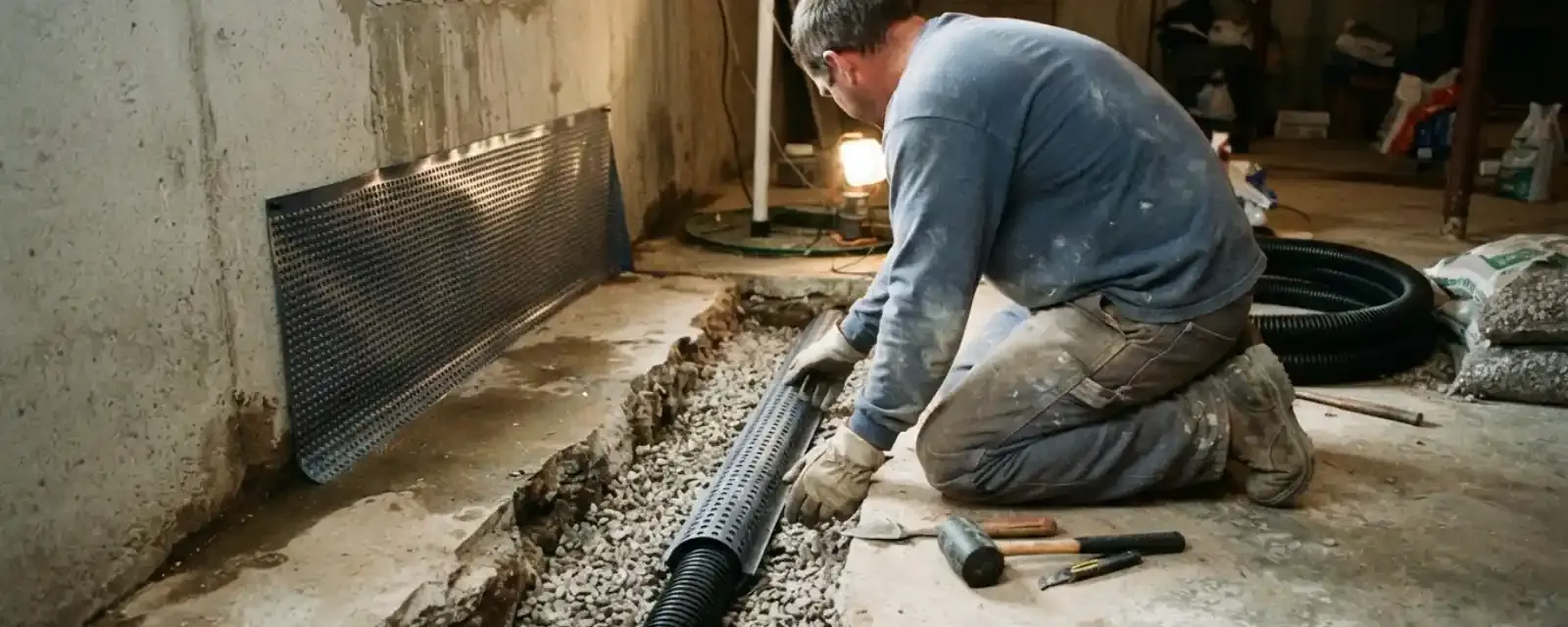
Perforated pipe along the inside of the footing, set in gravel and covered by new concrete, directs groundwater to the pit.
Sump pit and pump
A lined pit collects the water and a pump sends it out through a discharge line. See sump pump installation and repair for the pump itself.
Backwater valve or check valve
A valve in the sewer line closes when sewage tries to flow backward, so a surcharged sewer cannot push water into the floor drain.
Floor drain and sewer line work
Roots, grease and old clay pipe slow drainage. Cleaning or repairing the line removes one cause of backups.
Ready to plan a dry basement?
Call (773) 207-0518 and a licensed plumber will talk through your options and book a visit.
What a plumber cannot promise
We cannot waterproof a foundation wall from the outside, repair structural cracks, or regrade your yard. We will not guarantee that a basement stays dry in every storm, because a flooded street can overwhelm any home's drainage.
What we can do is fix the plumbing causes, install the drainage equipment, and tell you what is left. If a waterproofing contractor or structural engineer is the right next call, we say so before you spend more.
Blue Island's older housing and the combined sewer
About 64.7% of Blue Island homes were built before 1970, and the median build year is 1961. Older foundations tend to be block or poured concrete with clay or cast iron drain lines, so both seepage and sewer issues are common questions. That is why we check the floor drain and main line, not only the walls.
Most of the city sits on a combined sewer system. Washington Street and Vermont Street near California are named as low-lying areas where the county's hazard plan reports urban flooding. A nonprofit study of the Calumet Corridor recommended check valves and overhead sewers for homes in this kind of area.
A sump pit tied to a new discharge line counts as plumbing installation, and Blue Island code section 150.052 requires a permit for that work. The Illinois Plumbing Code (77 Ill. Adm. Code 890) sets the plumbing standards behind it. Discharge rules for sump pumps vary by municipality, so ask Building Safety where your pump may drain.
How an interior drain tile and sump job works
This is a planned project, scheduled around your home rather than a storm.
Inspect and plan
We check walls, floor drains and the sewer line, then explain the cause and give you a clear price before work starts.
Open the floor
A saw cuts a strip of concrete along the wall, and we dig a trench down to the footing.
Lay drain tile and gravel
Perforated pipe slopes toward the pit and is covered with washed stone.
Set the pit and pump
The pit is sunk below floor level, lined, fitted with a pump and connected to the discharge line.
Pour and test
New concrete closes the trench. We then pour water in and watch the pump clear it.
What drives the price of a basement drainage project
We give you a clear price before work starts. These factors decide where it lands.
Insurance rarely pays for waterproofing as an improvement. Sudden burst damage is the usual covered case, while seepage, gradual leaks and sewer backup often need a specific endorsement, so check your policy. Want your real number? Call (773) 207-0518.
What to note before we visit
A few details save time at the first appointment.
- Where the water appears. Walls, floor cracks, the floor drain or around a pipe.
- When it appears. During rain, days after rain, or on dry days.
- What is on the floor. Stored items, finished walls and carpet affect access and moisture checks.
- Past work. Any earlier waterproofing, sump pit or sewer repair, and photos if you have them.
- Your insurance policy. Check whether sewer backup coverage is listed.
Wet basement questions answered plainly
Partly. Plumbers install interior drain tile, sump pits and backwater valves. Wall cracks, exterior membranes and regrading belong to a waterproofing or foundation contractor.
Groundwater pressure and an overloaded combined sewer both peak in heavy rain. Floor drain backup points to the sewer, while seepage at the wall-floor joint points to groundwater.
It closes automatically when sewage tries to flow backward into your home. If sewer water comes through your floor drain after storms, it is worth asking about.
No. It manages water that reaches the floor edge but does not repair the wall. A structural crack should be reviewed by a qualified foundation specialist.
The city's plumbing permit rule covers plumbing installation and repair, and the Building Safety Department issues it. Call that office to confirm what your project needs.
Use the Illinois Department of Public Health plumbing license verification page. Ask for the name on the license before work begins.