Cold water at the shower or a wet floor around the tank means you need water heater repair, and in a Blue Island January that is no small inconvenience. Our 24/7 emergency line is open overnight, so a tank that quits at 2 a.m. gets a real answer.
Licensed plumbers test the unit on site, tell you whether a part will fix it, and give you a clear price before work starts. Call (773) 207-0518 and say what you see, hear and smell.
Most failures sit in a short list. A dead pilot or igniter, a tripped limit switch, a burned-out element, a worn thermostat, or a weeping fitting. A few are final, like a tank that has rusted through. The sections below sort your symptoms so you know which group you are in before anyone arrives.
Leaking tank or no hot water right now? Do this while you wait
Water on the floor comes first. Close the cold-water supply valve on the pipe feeding the top of the tank, then cut the power or fuel. If the water is creeping toward a floor drain, an outlet or the furnace, lift anything valuable out of its path.
A drip from a pipe fitting is a smaller job than a leak from the tank shell, but you cannot tell from across the basement. Take a photo for the technician and keep the area around the heater clear.
- Close the cold-water shutoff above the tank. It is usually a lever or a round wheel handle.
- Switch off the breaker for an electric unit. For a gas unit, turn the gas control knob to off.
- Stay out of standing water if it reaches an outlet, a cord or the electrical panel.
- Smell gas or rotten eggs? Leave the building and call 911 or your gas utility's emergency line from outside. Do not touch light switches.
- Call (773) 207-0518 and tell us the fuel type, where the tank sits and where the water is coming from.
No hot water and no leak buys you a little more time. Same-day appointments are available when the schedule allows, and the 24/7 line takes calls after hours if the heater dies on a Sunday night.
Match your symptom to the likely cause
Symptoms overlap, so treat this table as a starting guess and not a diagnosis. The technician confirms each one with a meter or a gauge before touching a part.
| What you notice | Probable cause | Usual path |
|---|---|---|
| No hot water, gas unit | Pilot out, worn thermocouple, failed igniter or a gas control valve that will not open | Relight and test, or replace the thermocouple or igniter |
| No hot water, electric unit | Tripped breaker, tripped high-limit switch, failed heating element or thermostat | Reset and meter-test, then swap the failed element or thermostat |
| Hot water runs out fast | Sediment on the tank floor, a broken dip tube or one dead element | Flush the tank, replace the dip tube or the lower element |
| Popping or rumbling | Sediment hardening under the burner or element | Flush now, or plan a replacement if the tank is old |
| Water pooling at the base | Loose fitting, leaking drain valve, weeping relief valve or a split tank | Tighten or replace the part, but a split shell means replacement |
| Pilot keeps going out | Draft problem, dirty pilot tube or a failing thermocouple | Clean and test, then check venting |
Hot water is out, and you want a straight answer
Call (773) 207-0518 any hour. Describe the symptom and we will tell you what to shut off and when a licensed plumber can come.
What a repair visit looks like
The order matters, because a quick guess at the wrong part costs you twice.
Listen and look
We ask what happened before the failure, then check the tank, the pan, the relief valve discharge pipe and the venting for water, scorch marks or rust.
Test fuel and power
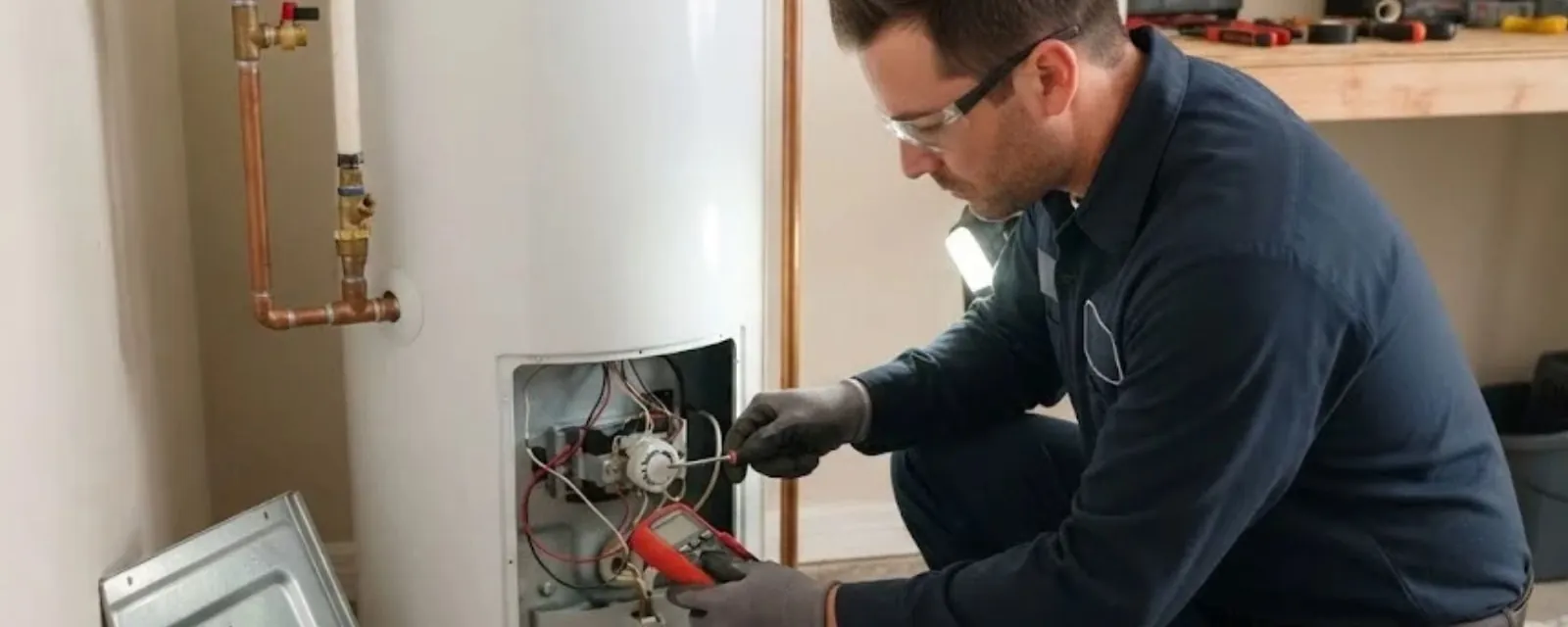
A multimeter checks elements, thermostats and limit switches. On gas units a leak detector sweeps the joints and the burner is observed running.
Isolate the failed part
We confirm the fault by testing, not by swapping parts until the heat returns. You see the result before any repair starts.
Price, repair, retest
You get a clear price first. After the repair we run the heater through a full cycle and check for leaks, flame quality and water temperature at a tap.
Gas, electric and hybrid heat pump units fail in different ways
The fuel decides what can break, and it also decides how quickly we can usually fix it.
Gas tank
Weak flame, a sooty burner, a bad thermocouple or an igniter that clicks without lighting. Venting trouble can also shut the burner down for safety, so we check the flue after any gas repair.
Electric tank
Two heating elements and two thermostats do the work, each a common wear item. A tripped high-limit button is a symptom, so we find out why it tripped before resetting it.
Hybrid heat pump
These add a compressor, a fan, an air filter and a condensate drain. Many fall back on their electric elements when something fails, so hot water continues but the power bill climbs. Write down any error code on the display and tell us the model.
Sealed-system faults in a hybrid, such as a failed compressor, may need manufacturer parts and a longer wait. We say so plainly, and we compare that repair against a full replacement so you can choose with real numbers.
Pilot lights, thermostats and the anode rod
On an older gas heater, a small thermocouple senses the pilot flame. If it weakens, it tells the gas valve to close, and that is why a pilot dies again right after you light it. Newer gas units use an electronic igniter in its place, which can crack or wear out.
On an electric tank, the upper thermostat controls the top element and passes power to the lower one. When either thermostat drifts, you get lukewarm water or scalding spikes.
Inside the tank, a sacrificial anode rod draws corrosion away from the steel. Swapping a spent rod can extend a sound tank's life. Once the steel is pitted, no rod will save it, and we tell you so before you pay.
Repairs such as a new element, thermostat or anode rod follow the manufacturer's service instructions for your model. Plumbing-side work falls under the Illinois Plumbing License Law (225 ILCS 320). If you smell gas, leave the building and call the gas utility or 911 before anything else.
Older Blue Island basements, stuck valves and flooded burners
About 64.7% of Blue Island housing was built before 1970, and the median build year is 1961. In houses that age the shutoff valve above the tank has often sat untouched for decades. It may not close fully, or it may start dripping once you turn it, so tell the technician before we reach for it. Replacing a seized valve can be part of the visit.
Basement water is a fact of life here. The county's hazard plan blames the age and capacity of the combined sewer system for urban flooding in parts of the city. If floodwater reached your burner, gas control or wiring, do not relight the heater. Have it inspected first.
Renters are 48.2% of Blue Island households. If you rent, report a dead heater to your landlord in writing, then call us once the owner is ready to approve the work.
When repair stops making sense
A leak from the tank shell cannot be patched. The steel is gone, and the repair is a new heater, so see our water heater replacement page for that decision.
If the unit is old, has several failing parts and the tank floor is full of sediment, we will say that a repair buys you a short reprieve. Check the manufacture date on the rating plate and give us the model number when you call.
What moves the cost of a water heater repair
We do not quote a number sight unseen, because the cause decides the bill. You get a clear price before work starts, and you can say no after hearing it.
Insurance usually responds when a tank bursts suddenly and floods the room. Slow leaks, wear and sewer backup often need a specific endorsement, so read your policy before you assume. Want your real number? Call (773) 207-0518.
Water heater repair questions from Blue Island homes
Yes. The 24/7 emergency line takes calls overnight and on weekends, and a licensed plumber is dispatched for leaks and total loss of hot water. Same-day appointments are available when the schedule allows for problems that can wait a few hours.
While you wait, shut off the cold-water supply to the tank and cut the power or gas.
Sometimes. A dirty pilot tube or a worn thermocouple is a short repair. If the pilot dies because exhaust is not leaving the building, the problem is venting, and that needs attention before the heater runs again.
Sediment settles on the tank floor and traps small pockets of water that boil under it. Flushing can quiet an otherwise healthy tank. If the noise returns right away, the tank is likely near the end of its life.
No. A fitting drip can get worse without warning, and a shell leak will not stop. Close the cold supply, turn the heater off and call. If the leak looks like it is coming from the tank body, expect a replacement conversation.
We diagnose it on site and fix what we can, such as filters, condensate drains and electric elements. Sealed-system parts may require the manufacturer. Tell us the model and any error code when you call so we know what to bring.
Use the Illinois Department of Public Health Plumbing License Verification lookup. Plumbers are licensed under the Illinois Plumbing License Law, 225 ILCS 320. Ask any contractor for the name on the licence and search it yourself.