You prevent clogged drains by keeping four things out of them: grease, hair, wipes and food scraps. Add a strainer in every sink and tub, flush the lines with hot water once a month, and schedule a professional cleaning if a drain slows twice in a year. Those steps stop the large majority of household clogs before they start.
Clogs are rarely sudden. A drain narrows a little every week as film builds on the pipe wall, until one more handful of hair or one greasy pan closes it. The habits below work room by room, and the later sections explain how to handle an older house.
Kitchen habits that save the most pipes
The kitchen sink is where the worst clogs begin, because grease cools and hardens inside the line.
Pour fat into a can, not the sink
Bacon grease, cooking oil and butter cool into a waxy coat that traps everything that follows.
Wipe pans before washing
A paper towel run over a greasy pan puts the oil in the trash and keeps it out of the trap.
Use a sink strainer
A basket strainer catches rice, coffee grounds and food scraps. Empty it into the trash after each use.
Rinse with hot water, then dish soap
A hot flush after washing greasy dishes helps move the film down the line before it sets.
Bathroom, laundry and toilet habits
Bathroom drains clog from hair and soap, and toilets clog from what people flush. Each one has a quick fix.
- Fit a hair catcher in the shower and tub. Hair mixes with soap into a rubbery plug that strainers stop cheaply.
- Lift hair out of the drain by hand each week. A bent wire or plastic drain tool pulls out what the strainer misses.
- Flush only toilet paper. Wipes, cotton swabs, floss and feminine products do not break down, even if the package says flushable.
- Run the washing machine into a lint filter. A mesh filter on the discharge hose catches lint before it reaches the drain.
- Use less detergent. Too much soap leaves a film that clings to pipe walls and collects debris.
A simple maintenance schedule
A routine takes minutes and costs very little. The table shows what to do and how often.
| How often | What to do | Why it helps |
|---|---|---|
| Every use | Empty strainers and catch hair | Stops solids reaching the pipe |
| Weekly | Pull hair from tub and shower drains | Prevents a slow soap and hair plug |
| Monthly | Flush each drain with a kettle of hot (not boiling) water, then dish soap | Softens film and moves it downstream |
| Quarterly | Check under sinks for drips, and run water in rarely used drains | Keeps traps filled and catches early leaks |
| Yearly or after two slow drains | Book a professional cleaning | Clears buildup and checks for roots or damage |
Same drain slowing down again?
A repeat clog is a sign of buildup or damage further down. Call (773) 207-0518 and a licensed plumber will check the line and quote a clear price.
Why drain chemicals are the wrong prevention tool
Store-bought liquid openers often feel like a fast fix, but they do not clean the pipe wall and they can sit in a blocked line for hours. Caustic products can damage older metal pipes and fittings, and they create a hazard for anyone who later opens the trap. Enzyme cleaners work slowly and suit a monthly maintenance dose, not an active clog.
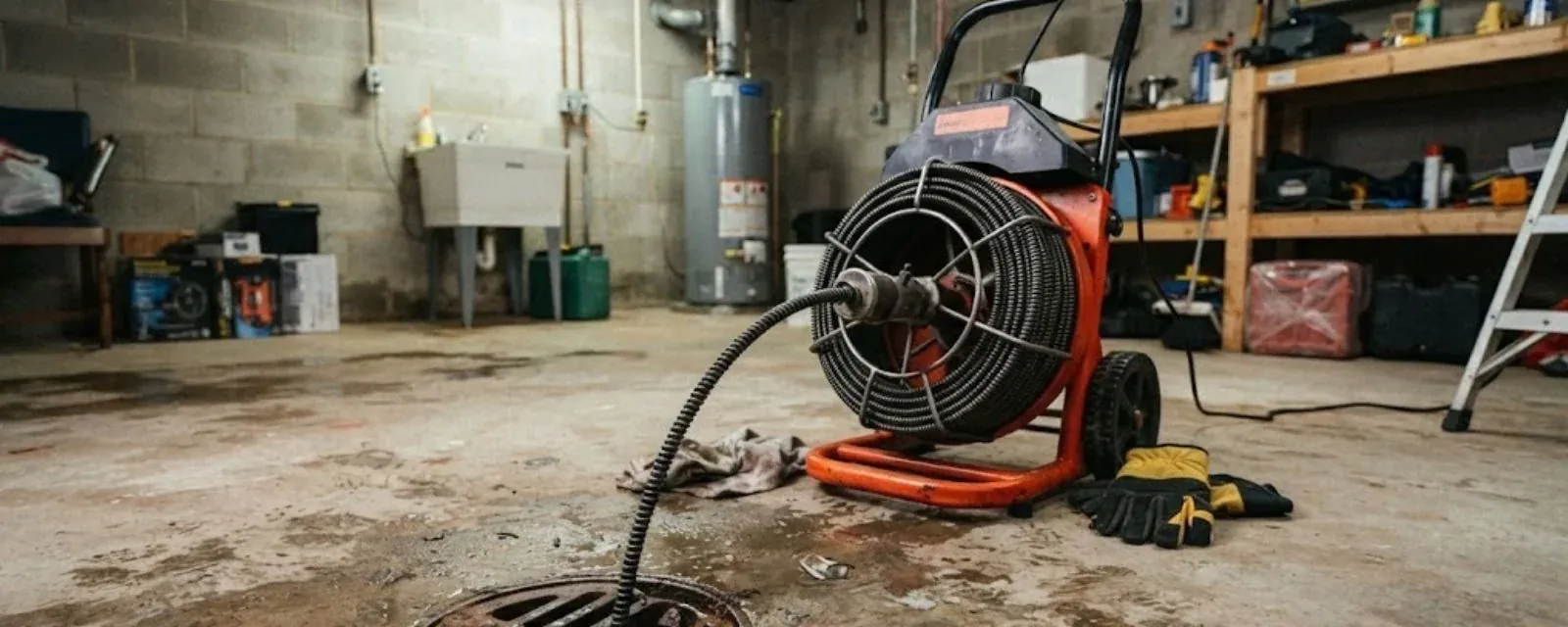
A plumber's drain machine or hydro jetting tool scours the full pipe wall and removes buildup that a chemical leaves behind. If you want a lasting reset on a line that clogs often, ask about hydro jetting rather than another bottle.
Blue Island code section 52.009 describes house sewers as tile or cast iron, at least 6 inches across. Most of the city also drains to a combined sewer that carries storm runoff with household waste. Wipes and grease that cling to an old pipe wall make that shared system easier to overload.
Blue Island's code, section 52.009, requires a house sewer of tile or cast iron at least 6 inches inside. Many older homes still have exactly that, which is why roots and grease build up at joints over the decades. Good habits protect it, and a camera inspection tells you its real condition.
What to do at the first sign of a slow drain
A slow drain is the cheapest moment to act. Waiting turns a rinse into a service call.
Clear the visible blockage
Remove the stopper or strainer and pull out hair and debris.
Try a plunger or drain snake
A hand-crank snake breaks up hair clogs a few feet down the line.
Flush with hot water and soap
Pour hot tap water, then a squirt of dish soap and more hot water.
Check whether other drains are slow too
If more than one fixture is affected, the blockage is in a shared line.
Call a licensed plumber
A recurring clog means buildup further down, tree roots or a damaged pipe.
Professional drain cleaning reaches parts of the line a home snake cannot and can include a camera look to confirm the line is clear.
When a clog is not really a clog
Gurgling, bubbling in a floor drain or several slow fixtures after a storm may not be a clog at all. It can point to a partly blocked house sewer or a full public sewer. Stop running water, wait for the rain to ease and call (773) 207-0518 if it does not clear.
Blue Island, IL: what local homeowners should know
About 64.7% of Blue Island homes were built before 1970, and nearly half of the city's 8,464 occupied homes are rentals (48.2%). Older drain lines have rougher walls where grease and hair catch, and a shared line in a multi-unit building carries the habits of every household. Tell tenants and neighbors what not to flush, because one clog affects the whole stack.
The majority of the city sits on a combined sewer that carries household waste and storm runoff together. County flood planning documents link repeated urban flooding to the age and capacity of that system, especially in low-lying areas near Washington Street and Vermont Street. A nonprofit planning group recommended check valves and overhead sewers for backup-prone homes, so ask a plumber whether a backwater valve suits your basement drain.
The green roof on the Blue Island Public Library in Uptown, honored by the MWRD in 2025, slows stormwater before it enters the combined sewer, which reduces the load on the system.
You can do something similar at home with a rain barrel, which keeps roof water out of the sewer during a storm. Our team also serves Alsip and Riverdale, so a call from a neighboring address reaches the same 24/7 line.
Questions homeowners ask
In kitchens it is grease and food scraps. In bathrooms it is hair mixed with soap. In toilets it is wipes and too much paper.
It can freshen a drain, but it does not remove a real clog or heavy buildup. Use it as a light monthly treatment, not a repair.
If a drain slows more than twice in a year, schedule a cleaning. Homes with older pipes or large trees nearby may benefit from a yearly check.
Avoid both. Grounds settle into a sludge in the pipe, and eggshell fragments can collect in the trap.
Much of the city is on a combined sewer, so storm runoff and household waste share the same pipes. When the public line fills, your drains can run slow or back up.
A backwater (check) valve lets wastewater leave the house but closes if the sewer pushes back. A plumber can tell you whether one fits your basement plumbing.