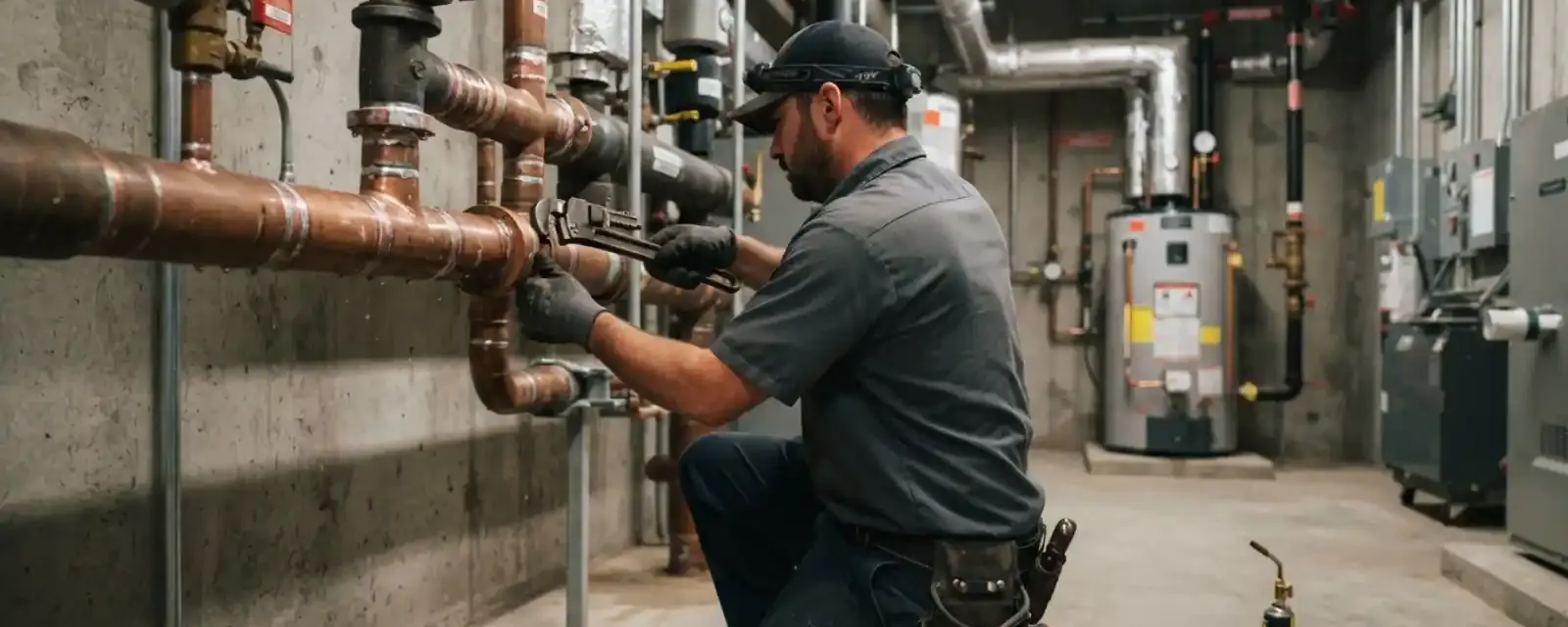
Copper plumbing tube comes in four types: K, L, M and DWV. Types K, L and M carry pressurized water and differ in wall thickness, with K the thickest and M the thinnest. DWV is a thin-walled tube made for drains, waste and vents, where there is no pressure to contain.
Each type is printed with a stripe of color so you can identify it at a glance. Knowing the code helps when you read a repiping quote, inspect an old basement or decide whether a section of pipe is worth saving. In Blue Island, where most homes pre-date 1970, it also helps you tell original copper from later repairs.
The four types at a glance
The Copper Development Association lists the color codes and standards below. Wall thickness runs from thick to thin in the order K, L, M, so a heavier type holds more metal between the water and the wall.
| Type | Color code | Standard | Where it is used |
|---|---|---|---|
| Type K | Green | ASTM B88 | Thickest wall. Underground water service, fire protection, fuel oil, solar and HVAC |
| Type L | Blue | ASTM B88 | Medium wall. Domestic water inside the house, plus natural gas and LP gas lines where code allows |
| Type M | Red | ASTM B88 | Thinnest of the three pressure types. Domestic water distribution, fire protection and HVAC |
| DWV | Yellow | ASTM B306 | Drain, waste and vent piping only. Not for pressurized supply |
The color is the quickest check. A yellow stripe on a drain stack is expected. A yellow stripe on a pressurized supply line is a red flag that someone used the wrong tube.
Type K: the underground workhorse
Type K has the thickest wall, which suits pipe that is buried, flexed and loaded by soil. Water service lines that run from the street to the house are a classic Type K application.
The Illinois Plumbing Code (77 Ill. Adm. Code 890) calls for water service pipe to sit at least 36 inches deep or below frost penetration, whichever is deeper, so the pipe has to hold up under real weight and cold.
You will also see Type K in fire protection and snow melting systems. Most homeowners never touch it, but it matters when you hear a plumber say the service line needs replacing. The service line is the pipe between the street connection and your home, and that choice of material affects how long it lasts.
Type L and Type M inside the walls
Type L is the standard for interior water in much of the country. It handles pressure with a margin to spare and stands up to the vibration and expansion that hot water lines endure. Type L also appears on gas piping where local code permits.
Type M has a thinner wall. It works for interior distribution in many houses and costs less, but a thinner wall leaves less metal to wear before a pinhole forms. If a plumber offers both types, ask which one the local inspector prefers. Blue Island does not publish a rule on this in the sources we reviewed, so the Building Safety Department is the place to confirm what it accepts.
Not sure what pipe you have?
Call (773) 207-0518 and a licensed plumber can help you read your basement. Same-day appointments are available when the schedule allows, and the clear price comes before work starts.
How to identify the copper in your basement
A short walk through the basement can tell you what you have. Bring a flashlight and a rag to wipe dust off the pipe.
- Look for the printed stripe. Letters and a color stripe are stamped along the tube. Green means K, blue means L, red means M and yellow means DWV.
- Check where the pipe enters. Find the main shutoff and meter. The first few feet of pipe often differ from the rest of the house.
- Note the joints. Soldered joints look like small silver rings at each fitting. Compression and flare joints are a sign of later repairs.
- Look for green or white crust. Crusty fittings are slowly leaking. Wipe them dry and watch for a bead of moisture over an hour.
- Tap the drain stack. Larger pipes in cast iron or plastic belong to the drain system. Copper DWV is rare and usually runs in short branches.
Photograph what you find. A clear picture of the labels and the shutoff makes any plumber's estimate faster and more accurate.
What Blue Island's housing age means for your pipes
The median Blue Island home was built in 1961, and about 64.7% of the housing stock pre-dates 1970. That puts a large share of local pipework in the age range where original materials are wearing out. Many houses combine original supply lines with pieces swapped in over the decades, so you may find several metals in one basement.
Mixed metals matter. When copper meets galvanized steel without a dielectric fitting, the steel corrodes faster at the joint. A plumber can separate the metals with the right union or recommend replacing the steel section. If you see rust-colored water or low pressure at the fixtures, mention the mixed pipe to the plumber right away.
Lead service lines: a different question from copper
The copper inside your house is only part of the water path. The service line from the street can be a different material. Blue Island's inventory dated April 1, 2025 lists 5,433 service lines in total. Of those, 529 are lead, 81 are galvanized pipe requiring replacement, 116 are non-lead and 4,707 are still marked unknown.
That means an unknown line is the most common case. In August 2026 the city offered free in-home identification, a visual check of the line where it enters the home that takes about two to five minutes. If you have never had your line checked, call the Water and Sewer Department and ask whether another visit is scheduled.
How a plumber approaches a repipe
When copper has worn out, a repiping project replaces the supply lines through the house. The sequence below shows how a licensed crew usually works.
Survey and plan
The plumber maps every fixture, notes the pipe type and decides which runs to replace and how to reach them.
Permit and shutoff
Work that alters plumbing is covered by Blue Island code section 150.052, which requires a plumbing permit applied for through the Building Department.
Cut and fit
Old runs come out and new copper or another approved material goes in. Soldered joints are cleaned, fluxed and heated until the solder flows.
Pressure test and inspect
The system is filled and checked for leaks, and the plumber calls the Plumbing Inspector before pipes are covered.
Patch and restore
Walls and floors are closed up once the inspector signs off.
When to call for help
If you spot green crust, pinhole sprays, discolored water or noisy pipes, a plumber can test the system and tell you whether to patch or replace. Our crews handle spot repairs under plumbing installation and full line replacements under repiping. Call (773) 207-0518 and describe what you found.
Homeowners in nearby Midlothian and Crestwood face similar questions, though their housing mix differs. Midlothian's median build year is 1965 and Crestwood's is 1976, so the same pipe type may be older or newer depending on the town.
Blue Island, IL: what local homeowners should know
Blue Island's water comes from the City of Chicago, and the city's lead service line inventory dated April 1, 2025 counts 5,433 lines, with 529 lead, 81 galvanized and 4,707 unknown. If your line has never been identified, ask the Water and Sewer Department how to arrange a visual check at the spot where it enters your home.
Housing age points the same way. The median year built is 1961, 28.8% of units went up before 1940 and another 35.9% between 1940 and 1969. The Illinois Plumbing Code asks for water service pipe to be at least 36 inches deep or below frost penetration, so any service line work involves excavation, and the excavator must call JULIE (811) before digging.
Questions homeowners ask
Both carry pressurized water and use the same ASTM B88 standard. Type L has a thicker wall and Type M has a thinner one. Thicker wall means more metal to wear through, so L tends to last longer in demanding runs.
No. DWV is made to ASTM B306 for drains, waste and vents. It is thin-walled and not rated for pressurized supply, so it belongs only on the drain side of the house.
Look where the line enters the basement, but do not guess from color alone. The city's identification visit is a quick visual check, so ask the Blue Island Water and Sewer Department how to arrange one.
It is a long-used material with a proven record. Other approved materials exist, and the right choice depends on the house, the budget and what the local inspector accepts. A plumber can compare options at a visit.
The Building Safety Department at City Hall, 13051 Greenwood Avenue. Code section 150.052 says a plumber applies for the permit as the owner's agent, and the Plumbing Inspector checks the plumber's license first.
Yes. The 24/7 emergency line is open for burst pipes. Close the main shutoff, open a low faucet to drain the line and keep away from wet electrical areas until the plumber arrives.