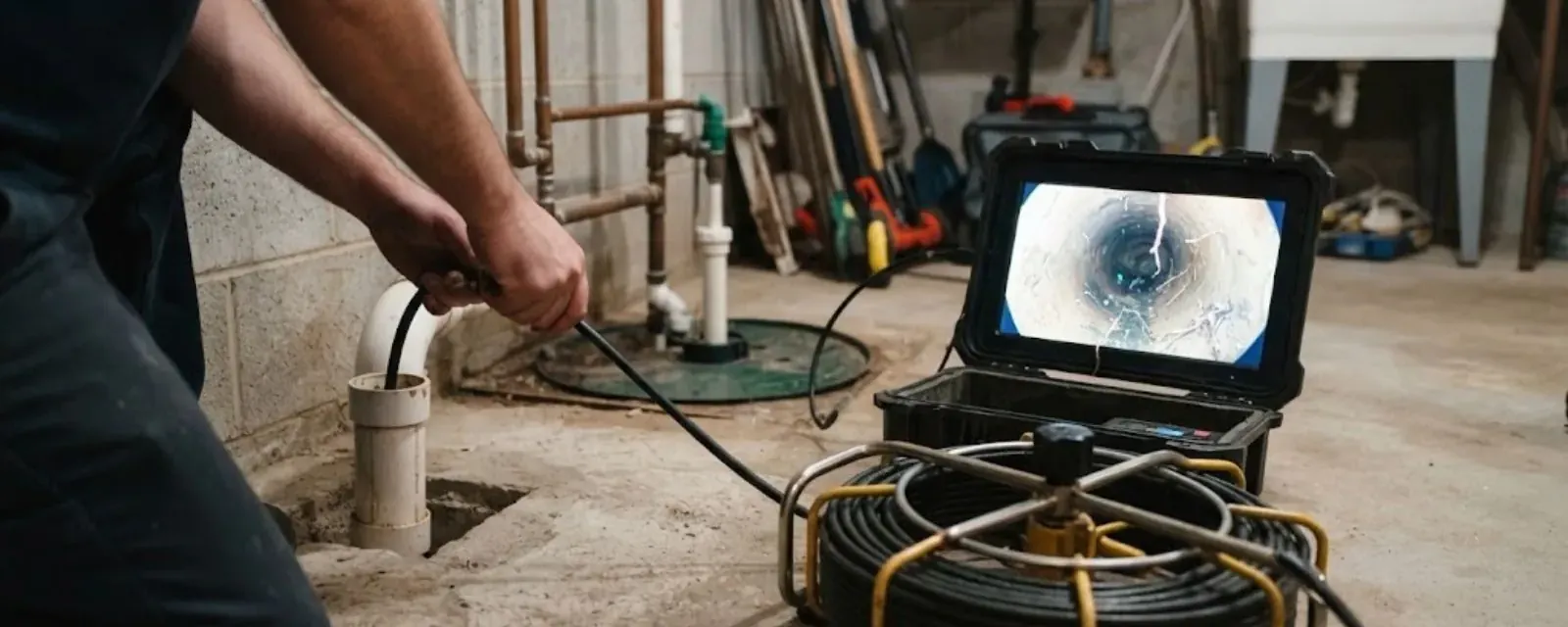
A sewer inspection puts a waterproof camera inside the pipe that runs from your house to the street, so you can see its condition instead of guessing. Most people book one before buying a home, before relining or digging, or after a line has clogged twice. Call (773) 207-0518 to schedule a time that suits you. The dispatch line runs 24/7, and same-day appointments are available when the schedule allows.
The visit is quiet and fairly quick. You end up with video, a summary of what we saw and a clear sense of what, if anything, to do next.
Good reasons to book a camera visit
Most inspections fall into one of these situations, and each leads to a different conversation afterward.
Before buying a house
A home inspector usually cannot see inside buried sewer pipe. Roughly half of Blue Island homes are owner-occupied (51.8%), and a camera tells a buyer what the seller may not know.
After repeat clogs
When the same line clogs twice, the footage shows whether the cause is roots, grease, a sag or a break.
Before lining or a dig
Lining only works on pipe that holds its shape. Footage and a locate decide whether lining, a spot repair or nothing is needed.
Before finishing a basement
Floors and walls will cover the cleanout and pipe. Check the line first.
Large trees nearby
Roots find joints. A look every few years catches them early.
What happens during a sewer camera inspection
The process is the same whatever the reason for the visit.
Find the access point
We open a cleanout, or pull a toilet if there is no cleanout, so the camera can enter the line.
Feed the camera
A self-leveling camera head on a flexible cable travels toward the street while we watch the monitor and keep video.
Locate and mark
A transmitter in the camera head lets us trace the pipe at the surface. We note the depth and distance of each problem.
Review with you
We play back the footage, point out what matters and tell you plainly whether any work is needed.
Want to see inside the pipe?
Call (773) 207-0518 to schedule a sewer camera inspection at a time that works for you.
What the footage tells you
Pipe problems look different on screen, and each one suggests a different next step.
| You see | What it means | Usual next step |
|---|---|---|
| Hair-thin roots at joints | Early root entry | Scheduled cutting or hydro jetting |
| Heavy scale or rust bumps | Aging cast iron | Descale, then monitor or plan repair |
| Standing water in a dip | A bellied or sagging pipe | Repair of that section |
| Open or offset joint | Soil can enter and leak out | Spot repair or lining |
| Smooth, clear walls | Pipe is in good shape | Keep records and re-check in a few years |
What a camera cannot see
A camera shows the inside of the pipe, not the soil around it. It cannot tell you how a clay tile line was bedded, and it cannot see a leak that stays dry on the day of the visit. If the footage is unclear because the pipe is full of debris, we say so and clear it first with a cable.
That honesty matters when you are buying. A clean video is a good sign, not a promise about next year, so we record the date and distance of every observation. Ask for a copy so you have a baseline.
Blue Island code section 52.009 expects a house sewer of tile or cast iron at least 6 inches across. That gives the camera a benchmark for spotting a pipe that has sagged, offset or narrowed. Ordinance 09-048 also requires houses to be inspected before occupancy, which makes a pre-purchase camera look worth discussing.
Why older Blue Island pipe deserves a look
About 64.7% of Blue Island housing was built before 1970, and the median build year is 1961 (CMAP, 2020 to 2024 survey data). City code allows tile or cast iron house sewers at least 6 inches inside, and both materials age in ways a camera shows clearly.
Most of the city is on a combined sewer, so your private line feeds a shared system. Blue Island also requires houses and condos to be inspected before occupancy (Ordinance 09-048). That city inspection is a separate matter from a sewer scope, so call Building Safety if you want to know what it covers.
When to call right away, before the camera visit
A planned inspection can wait, but these signs mean sewage may be backing up now.
- Sewage rises in a floor drain or tub. Stop all water use in the house and call (773) 207-0518.
- Several fixtures gurgle together. Treat it as a main line warning and hold off on laundry and showers.
- A strong sewage smell fills the basement. Open a window, keep children and pets out, and call.
- A wet or sunken patch shows in the yard. Mark the spot with a stake or photo, and avoid walking on soft ground.
- Skip chemical drain openers. They leave caustic water in the line that the crew must then handle.
Get ready for the visit
A little preparation saves time and gets a better video.
- Find your cleanout. Look for a capped pipe near the foundation or in the basement floor.
- Clear the way. Move boxes and laundry baskets around the access point.
- Skip heavy water use that morning. A dry or low-flow pipe is easier to film.
- Tell us the history. Mention past clogs, smells or repairs.
- Think about questions. If buying, ask what an issue would cost to fix.
What affects the price of an inspection
You get a clear price before work starts, and the factors are simple.
Insurance does not usually pay for an inspection. Sudden burst damage is the usual covered case, while gradual leaks, wear and sewer backup often need a specific endorsement, so check your policy. Want your real number? Call (773) 207-0518.
What happens after the inspection
If the pipe is clear, you walk away with video and a clear record of the pipe. If a problem shows, we explain the options, including doing nothing for now. Routine buildup may need drain cleaning, while damage points toward sewer line cleaning or a repair plan.
We never ask you to decide on the spot, and the video stays with you for second opinions.
Blue Island's code, section 52.009, calls for a house sewer of tile or cast iron that is at least 6 inches across inside, so a camera visit often starts by noting what material and size your line actually is. Any repair that follows needs a plumbing permit under section 150.052, pulled by a licensed plumber or by an owner-occupant of a single-family home.
Sewer inspection questions from Blue Island buyers and owners
Most visits run about an hour, depending on pipe length and how clear it is. A blocked line needs clearing first, which adds time.
It is a smart step for homes built before 1970, which is about 64.7% of the city's housing. Roots, scale and sags are common in older tile and cast iron, and they are hard to see from the surface.
Yes. Ask for the footage and the summary at the visit. They help with second opinions and with negotiating a purchase.
It can show cracks, open joints and root entry that point to a leak. It cannot always see water escaping, so it works best along with a pipe locate and history of symptoms.
A camera head is light and flexible, and it rides along the bottom of the pipe. If the pipe is fragile or collapsed, we stop and tell you.
Every few years suits older homes or properties with mature trees. After any repair, a new video gives you a fresh baseline.