Sewage coming up a basement floor drain means the main line out of your house is blocked. Emergency sewer line cleaning is how we get it flowing again, and our 24/7 emergency line takes that call at any hour. Dial (773) 207-0518, tell us what you see, and keep every faucet and toilet off until we say otherwise. The sooner the line is open, the less water ends up on your floor.
The sewer line is the single pipe that carries everything from your home toward the street. When it clogs, every fixture feels it at once.
Sewage backup: your first moves before we arrive
A sewer backup carries bacteria, so the goal is to limit contact and stop adding water. Do not try to push the blockage through with a plunger on a flooded floor drain.
We take after-hours calls on the 24/7 emergency line, and same-day appointments are available when the schedule allows. We do not promise an arrival time, but we will tell you what to do in the meantime.
- No flushing, laundry, dishwasher or long showers.
- Keep people and pets out of the affected room, and stay away from wet outlets and the electrical panel.
- Lift valuables and boxes off the floor, and open a window if the smell is strong.
- Photograph the water line on walls and belongings before cleanup, then call (773) 207-0518.
Whose pipe is it, yours or the city's?
Blue Island city code treats each main building as having its own house sewer, tile or cast iron, at least 6 inches inside. The street sewers are owned by the city, and the large interceptors belong to the Metropolitan Water Reclamation District (city CSO notice).
That split decides who clears what. A blockage on your side of the connection is your repair. One in the street is a call to the Blue Island Water and Sewer Department. A camera run tells us which side you are on, which spares you from paying to clear a pipe that was never the problem.
Section 52.009 of Blue Island's code covers the house sewer serving each main building. City sewers and the MWRD interceptors sit further downstream, per the city's overflow notification plan. If several homes on your block back up at once, tell the Water and Sewer Department as well as us.
Section 52.009 of the Blue Island code sets the baseline for a house sewer: tile or cast iron, at least 6 inches inside. That matters here because cleaning tools are chosen to fit that pipe, and a line that has shrunk or sagged will not take a full-size cutter. Cleaning alone does not need a repair permit, but replacing a section does under section 150.052.
Sewage on the floor?
Keep the water off and call (773) 207-0518. The 24/7 line reaches a licensed plumber who can walk you through what to do first.
How we clear a main sewer line
The method depends on what is blocking the pipe, so we work in order.
Reach the cleanout
We open the cleanout, usually in the basement near the foundation wall or outside, and check how far water stands in the line.
Run a sectional cable
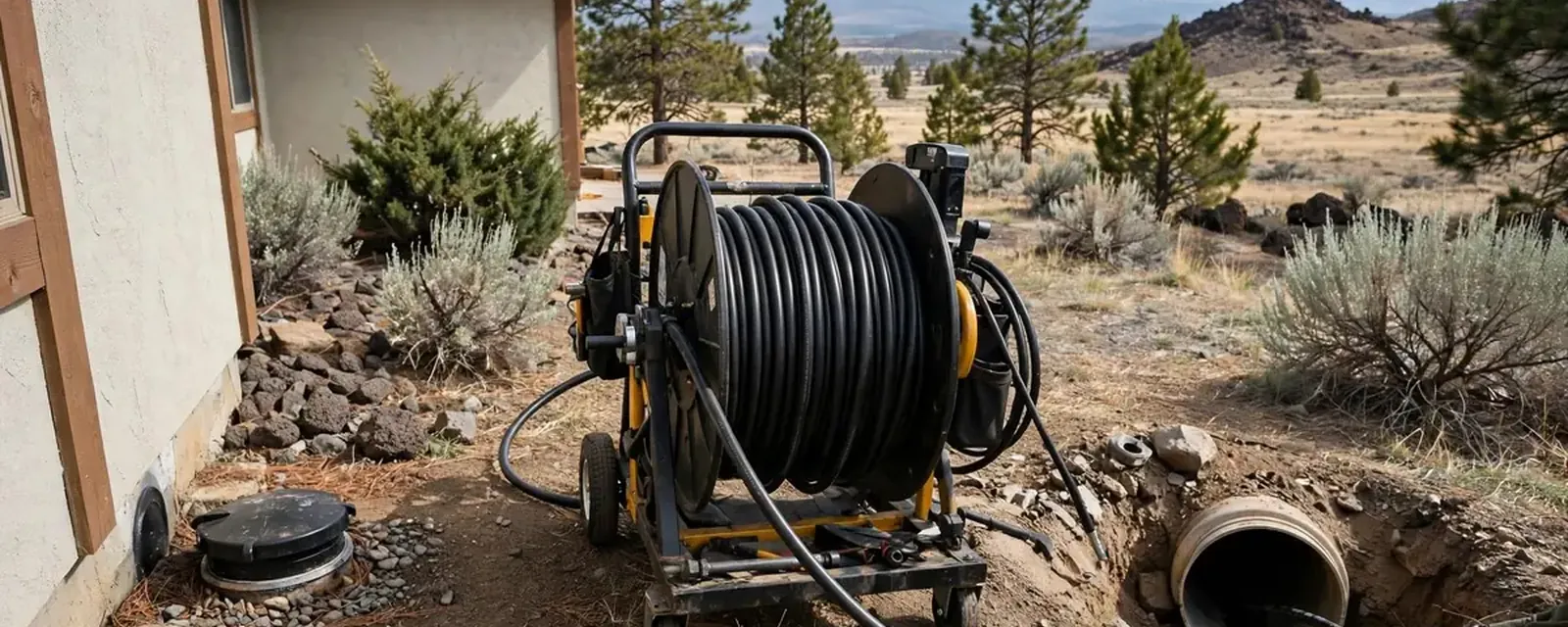
A heavy machine pushes a steel cable toward the blockage. A cutting head chews through roots, while a spear head breaks up packed paper.
Look with a camera
Once water moves, a camera follows the line to the street connection and shows roots, cracks or low spots.
What usually blocks a main sewer line
Knowing the cause tells us how likely it is to return.
Tree roots
Roots enter at joints in search of moisture. In older clay tile, joints are short and numerous, so roots find many entry points.
Grease and wipes
Grease hardens along the pipe, and wipes labeled flushable catch on it, forming a mat that grows.
A bellied pipe
A sag collects solids and holds standing water. A cable clears it, but it keeps clogging.
Broken or offset pipe
Soil shifts and joints separate. Debris and roots hang up at the edge.
Backups in the low ground and the combined sewer
Most of Blue Island is served by a combined sewer, which carries household waste and stormwater in the same pipe. The county flood plan names low-lying spots such as Washington Street and Vermont Street near California Avenue, and says structures along the Cal-Sag Channel have flooded.
The nonprofit RainReady counted 469 flood-related insurance claims in ZIP 60406 between 2007 and 2011 and urged check valves and overhead sewers. If your basement backs up during storms but your line runs clear on a dry day, cleaning will not cure it. A backwater valve question belongs with a plumber, so ask us during the visit.
Clean now or repair first: a decision guide
Not every backup is a cleaning job. This table shows how we decide.
| Camera shows | Cleaning enough? | Likely next step |
|---|---|---|
| Grease or paper only | Yes | Habit changes, maybe a yearly drain cleaning |
| Roots at joints | For now | Scheduled cutting, or a liner later |
| Low, sagging section | Temporarily | Repair of the sag, see sewer line repair |
| Cracked or collapsed pipe | No | Excavation or lining |
| Clean pipe, blocked street sewer | Not your line | Call the Blue Island Water and Sewer Department |
Warning signs before the sewer line stops
A line rarely fails without hints. Watch for these.
- Gurgling from toilets and drains. Air is moving past a restriction.
- More than one drain slow. A single sink is a branch problem. Several is the main.
- Sewer smell near the basement drain. Sewer gas is leaking through a dry trap or a cracked joint.
- A wet or soft patch in the yard. A leak outside may follow the sewer route.
- Backups after laundry day. A big wash pushes enough water to reveal a partial blockage.
What drives the price of sewer line cleaning
You get a clear price before work starts. These are the pieces.
On insurance: sudden burst damage is the usual covered case, while gradual leaks, wear and sewer backup often need a specific endorsement, so check your policy before you clean up. Want your real number? Call (773) 207-0518.
Sewer cleaning questions from Blue Island homeowners
Yes. The 24/7 emergency line takes calls at any hour, and a licensed plumber is dispatched for sewage backups, overflowing floor drains and fully blocked mains. We do not promise a specific arrival time, but we give you steps to follow while you wait.
A camera run from your cleanout shows. If your pipe is clear up to the street connection, the issue sits downstream. You can then call the Blue Island Water and Sewer Department, which handles the street sewers.
Look for a capped pipe near the foundation wall, in the basement floor, or just outside the house. Tell us if you cannot find it. We can usually work from a floor drain or a toilet.
Small blockages in a sink may respond to a plunger. A main sewer line needs a machine with enough cable to reach the street, and a blocked line may spill sewage when opened. We suggest leaving it to a licensed plumber.
Usually the cause was not removed, only opened. Roots and grease regrow. A camera and a jet or a repair deal with the pipe condition. Ask about a yearly cleaning if roots are the issue.